
Live Better Electrically: The Gold Medallion Electric Home Campaign
One of the most effective mass marketing home campaigns of all time was the “Live Better Electrically” (LBE) program of the post-World War II era. The program began in the mid 1950s when the General Electric and Westinghouse decided to co-sponsor a multi-million-dollar nationwide campaign to tout the benefits of electric power… and of course to sell more electrical devices. While General Electric (GE) provided the initial support for the program, which launched in March of 1956, Westinghouse followed with a pledge of $2.5 million dollars for a marketing campaign in 1958 (equivalent of $27 million in today dollars).
At the time, utility companies were rushing to meet the increased demand for electricity in postwar America. For GE and Westinghouse, another motivational factor was to create a new market for electric heat. In the early 1950s many homes of the era were still using coal or oil burning furnaces to heat their homes. For instance in the Seattle area, Puget Power noted that in 1952 they had less than 200 customers who were using electric heat. However by 1967 that number would grow to over 50,000 customers. For GE and Westinghouse, the program was a huge win. Not only did they sell individual residential electric heating units, they also supplied most of the electrical generating equipment to hundreds of utility companies nationwide.
The program was focused around the popular slogan of “Live Better Electrically,” which had actually been utilized loosely since the mid 1930s. In fact, it had been introduced to the public in 1926 via a cartoon character named “Reddy Kilowatt”. Designed by Alabama Power Company commercial manager Aston B. Collins, he was granted rights to the character after he left the company. In 1934 he took the design to the Edison Electrical Institute who loved the character and slogan, and began using both of them nationwide shortly thereafter. Later on the character was updated in 1946 by Disney animator Walter Lantz (illustrator of woody woodpecker, Andy panda). While the character was widely popular, by the mid 1950’s he began taking on a new role as the defacto ambassador to the newly launched “Medallion Home” program.
Supported nationwide by 900+ electric utilities and 180 electricity manufacturers, GE and Westinghouse launched the “Medallion Home” campaign at the National Electrical Manufacturers Association Conference in 1956. The objective of the program was simple - to encourage the development and sale of newly constructed homes that offered a complete electric house for heat, power and light. In the beginning the program was based on a tier system that focused on different areas of the house (each with its own logo).
- “Live Better Electrically” which focused on appliances… with a minimum of at least six major appliances (installed). This included an electric range or built-in oven and surface units; and other appliances.. such as an electric refrigerator and/or refrigerator/freezer; a fast recovery electric water heater; a dishwasher; a food waste disposer; a clothes dryer; an air conditioner, or a built-in vacuum system.
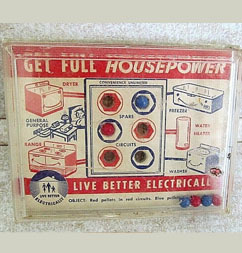
- “House Power“ which set a standard for electrical service (all homes were mandated initially to have an electrical service of at least 100 amps (to handle the smooth functioning of electrical devices – most homes at the time had 60 amp service \ today its 200), and they also had to have a minimum of 20 circuits, and a specified number of outlets and switches per linear foot of wall space.
- “Light for Living” which set a high standard for lighting (both indoor and outdoor) as recommended by the “American Home Lighting Institute”. Many of those lights were built-in features.. (vanity lights, soffit lights, drapery lights, etc..)
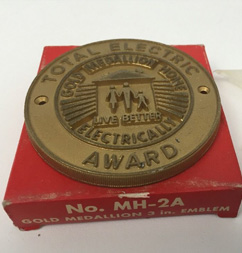
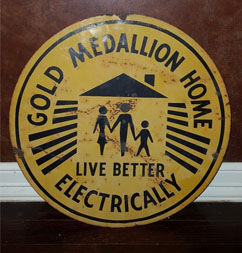
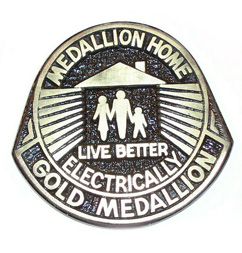
Utilizing all three aspects of the program would earn you a “Medallion Home” plaque - a Bronze Medallion plaque. If you went above and installed an "Electric heating system”, then you could earn the highest “Live Better Electrically” standard – a Gold Medallion plaque.
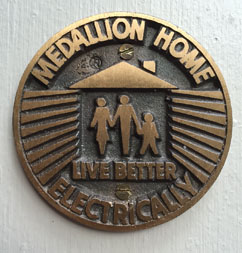
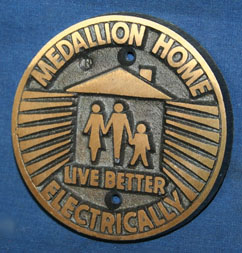
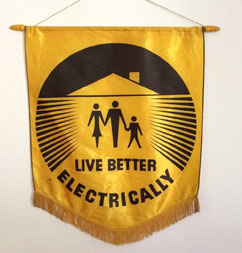
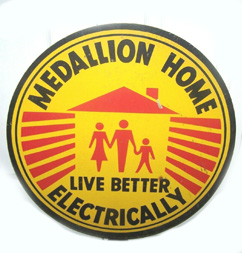
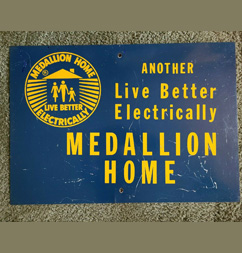
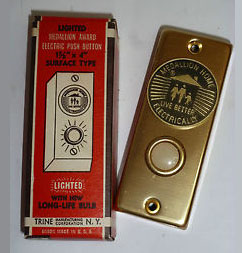
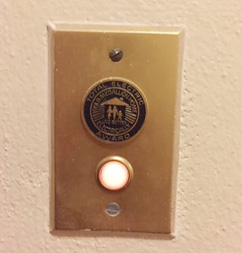
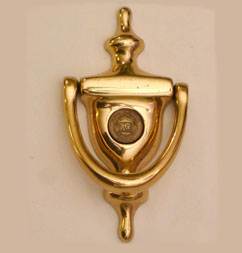
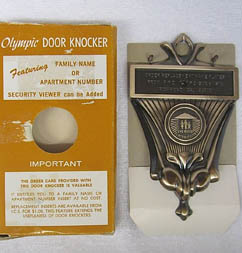
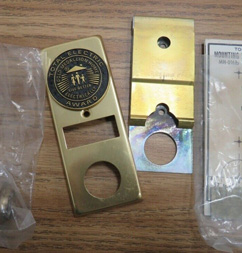
All homes that met “Live Better Electrically” standards could be marked with a 3” inch plaque emblazed with the “Live Better Electrically & Medallion Home” logo. The brass plaque was typically found near the front entry door affixed to the wall as a stand-alone marker, or could be embedded in the concrete sidewalk leading up to the house or on patio, or concrete doorstep. Some utility companies offered LBE doorbells or door knocker, or even a lighted house number frame. For those who wanted a less permanent marker, a 6” inch decal could be affixed to a window. Builders were also awarded a :certificate of authentication" by the local utility company which could be used to promote the sale of the dwelling. While the title of the campaign changed slightly over the years, the Live Better Electrically logo remained a constant.
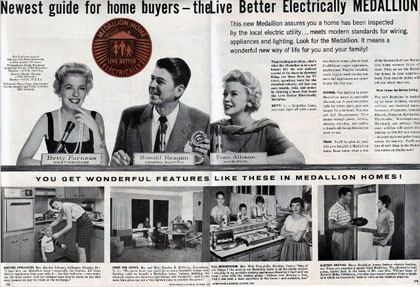
For the executives at General Electric and Westinghouse, the goal of the LBE program was to give national support and cohesion to a variety of existing programs that were being sponsored by local utilities. Their support came through a variety of magazine and newspaper ads, radio jingles and TV shorts. These were all venues that generally could not be funded by local utility companies or small businesses. For General Electric they decided to utilize the newly cast “General Electric Theater” show on CBS. Billed as a replacement for the “Bing Crosby Show”, the new show was an anthology series of episodes that were adaptations of novels, short stories, plays and film. In between scenes host Ronald Reagan, would take audiences on tours of GE Research facilities and manufacturing plants, all while touting the benefits and uses of electricity. Regan would often tour his own Pacific Palisades home, and brought on guest speakers to talk specifically about the “Live Better Electrically Program”. These included television and radio comedian, personality, and singer Fran Allison (for Whirlpool), and actress, consumer advocate, and current affairs commentator, Betty Furness (for Westinghouse).
At the local level the Medallion Home program, debuted in communities across the United States in 1957. The kickoff was a series of 12 homes that were planned to be built across the U.S. at different locations. This initial group was promoted by the Living for Young Housemakers Magazine. Among them was a home Boise, Idaho, which holds the distinction of being the very first Medallion home to be built in the United States. Other states followed quickly.
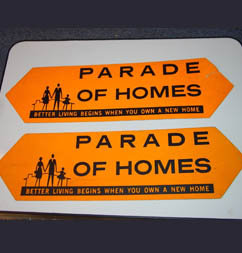
The Medallion Home program was quickly embraced with open arms by local utilities and builders. Most people were introduced to the program through local Home Shows (many of which in the early years created.. full scale mockups of homes inside exhibition halls), or through their locally sponsored model homes. Across the county, hundreds of developers and builders jumped on the LBE bandwagon, and the Medallion Home badge was a prominent feature of local Parade of Homes programs for numerous years. In fact entire neighborhoods were planned, built, and marketed as Medallion Homes. One example in Washington includes the Somerset development in Bellevue (1961).
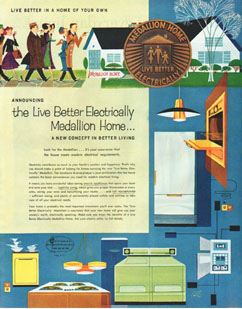
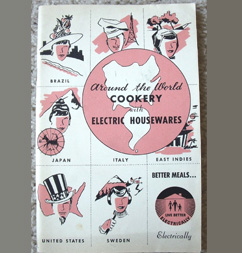
While the program started out relatively slow, it quickly became as massive marketing campaign. The initial launch came with the offer to send a free 70+ page brochure to homeowners which told them how their lives could be enriched by the use of electricity and the purchase of electric appliances. Various other pamphlets, books and brochures followed which were compiled to sell the idea of total electric living. For many homes, cooking with electricity was fairly new. As such cookbooks were produced to help home-owners understand the differences in cooking with electricity vs gas. Some power companies even created “Electric Living Centers” at their local offices which could teach homemakers how to use these new fangled "electric appliances".
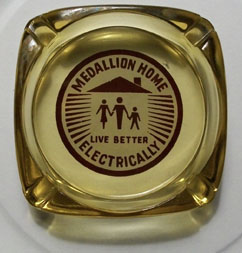
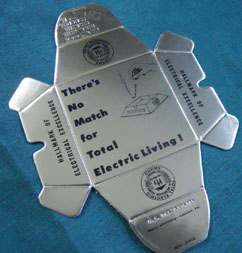
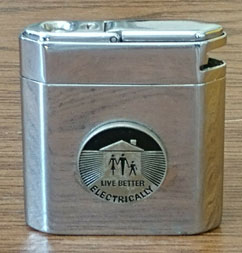
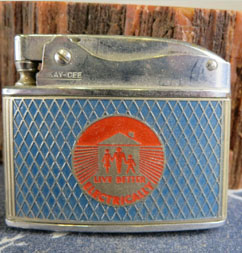
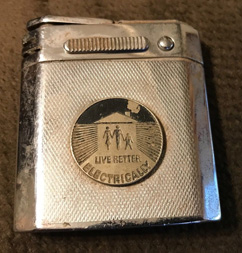
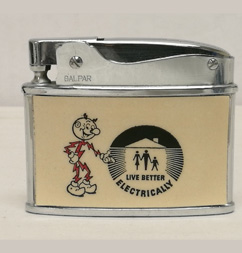
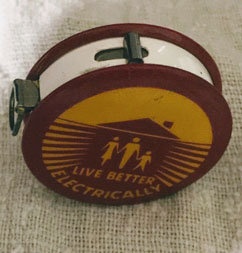
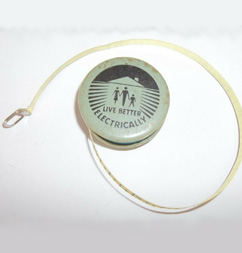
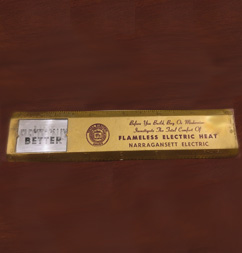
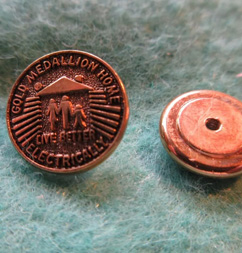
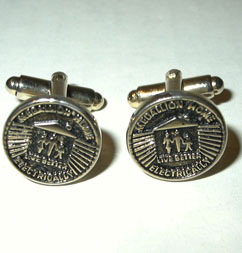
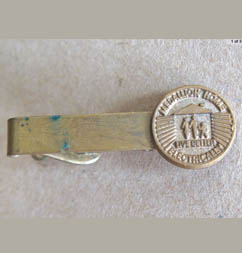
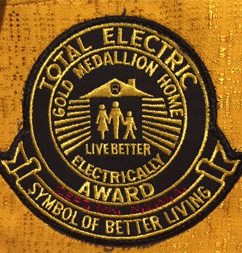
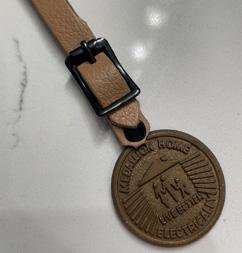
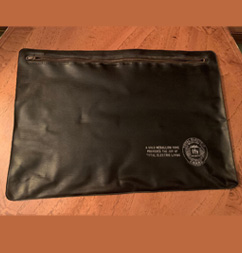
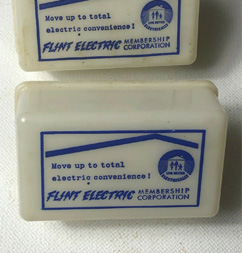
To push the program over the top, in 1959 GE hired the Institute for Motivational Research to come up with a marketing strategy. Their strategy would become a master class in product placement and free give-a-ways. To infiltrate the psyche of the American home buyer the LBE logo was emblazed on just about every product you could think of: Lighters, Ashtrays & Matches, Cuff links, lapel pins, luggage tags, Key Fobs, Tape measures, rulers, children’s toys, and even laundry bags.
Architecturally “Total Electric Living” help lift design restrictions on space planning in home construction via an ease of installation requirements, and the placement of appliances. What was once described as “custom” built, was often merely a carefully constructed plan, designed to hide a home’s bulky heating system. Now heating, cooling, cleaning and cooking became simple matters of wiring, without the additional problems encountered by chimneys, flues, vents and pipes. In fact, there were no restrictions on where appliances could be placed. Electrical Living opened up floor space for home offices, hobby workshops, family rooms, and special recreation centers.
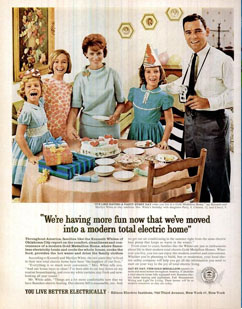
The LBE campaign positioned natural gas, the biggest power source of the time, as an outmoded method to operate appliances like furnaces, cooking ranges, water heaters, and clothes dryers. Living in a Medallion Home was marketed as the apex of modern living. Electricity would provide everything a homeowner needed, thus making life easier, more comfortable, more healthy and safe. Westinghouse noted that the total electric concept provided heating, cooling, electronic cooking in a matter of seconds, new illumination, new entertainment possibilities, faster preparation and preservation of food, the elimination of pollen and airborne germs, and it could even de-ice your driveway or control your lawn sprinklers. To heighten their modern, futuristic feel, many all-electric homes had some unusual electrical amenities such as electric curtain rods and baseboard heating, or even such unusual items as task lighting under a woman’s dressing table for pedicures.
By the mid 1970s the tide towards electricity had turned. Utility companies and the Federal Government had actually banding together in an effort to get customers to curtail their usage of electricity. To reach consumers the Federal Energy Administration created a new hero – “The Energy Ant,” a reversal of the all in ideas of using as much eletricity as possible.
By all accounts the Medallion Home campaign was a huge success. Some estimates note that the nationwide goal of about 1 million all-electric homes was achieved, although specific data on the actual number built is unknown. The program was still marketed through the mid 1970s and remained a selling point for real estate agents for another ten plus years. In Seattle dwellings were still being advertised as a Medallion Home as late as 1983. The U.S. Trademark for “Gold Medallion Home” Program was cancelled in 1973, but it’s safe to say that GE and Westinghouse changed the lives of thousands of American’s with their “Live Better Electrically” program of the 1950s and 60s.
By Michael Houser, State Architectural Historian
Mediallion Home Plaques & Markers and other Ephemera
 |
 |
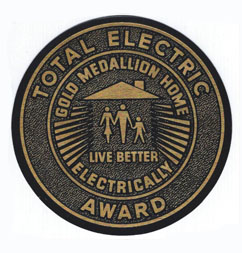 |
| Typical Medallion Home Plaque - 3" | "Total Electric" Gold Medallion Home | Medallion Home 6" Window Decal |
 |
 |
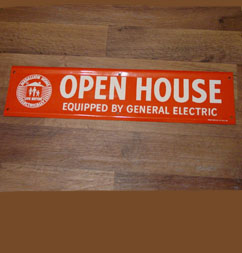 |
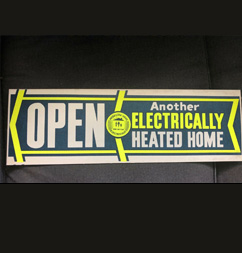
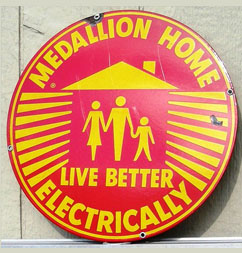
| Medallion Home Advertising Piece | Medallion Home Advertising Signs | Medallion Home Advertsiing Sign |
 |
 |
 |
| Medallion Home Metal Sign | Medallion Home Metal Sign | Medallion Home Banner |
 |
 |
 |
| Medallion Home Metal Sign | Medallion Home Metal Sign | Medallion Home Plaque - 3" |
 |
 |
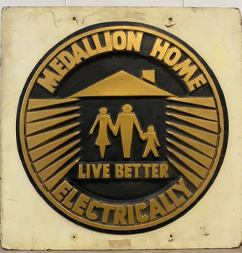 |
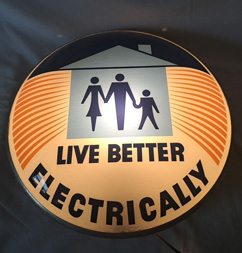
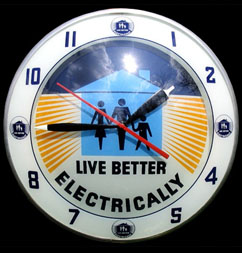
| Medalian Home Lighted Sign | Medallion Home Clock | Medallion Home - 3-D Plastic Sign |
 |
 |
 |
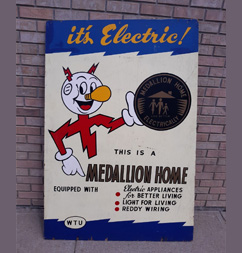
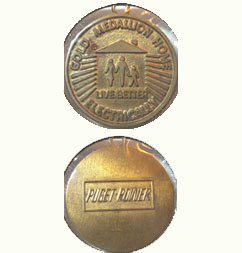
| Medallion Home Metal Adverising Sign | Medallion Home Entry Key | Medallion Home Key Fob (Puget Power) |
 |
 |
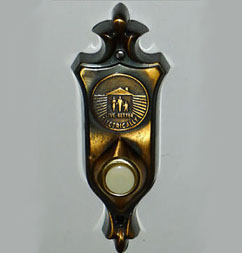 |
| Medallion Home Door Knocker | Medallion Home Door Knocker | Medallion Home Door Bell |
 |
 |
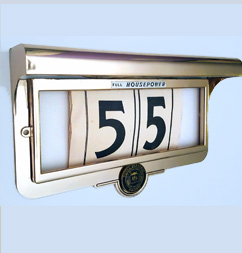 |
| Medallion Home Door Bell with Nameplate | Medallion Home Door Bell | Medallion Home Lighted House Numbers |
 |
 |
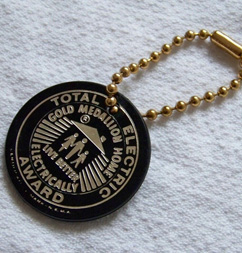 |
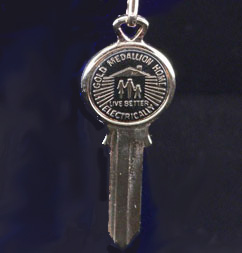
| Medallion Home Key | Medallion Home Key Fob - Puget Power | Medallion Home Key Fob |
 |
 |
 |
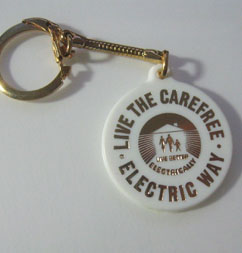
| Medallion Home Key Fob | Medallion Home Key Fob | Medallion Home Tile |
 |
 |
 |
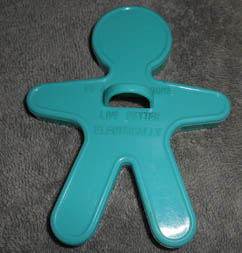
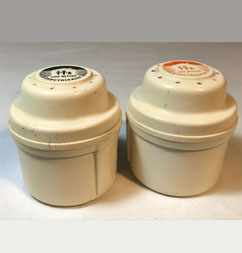
| Medallion Home Cookie Cutter | Medallion Home Salt & Pepper Shakers | Medallion Home Coaster |
 |
 |
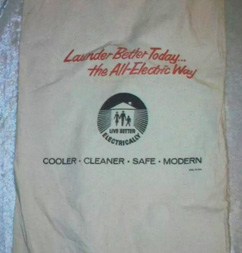 |
| Medallion Home Cookbo | Medallion Home Cookbook - 1958 | Medallion Home Laundry Bag |
 |
 |
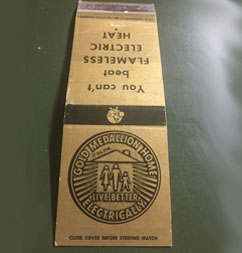 |
| Medallion Home Ash Tray | Medaliion Home Foldable Ashtray | Medallion Home Matches |
 |
 |
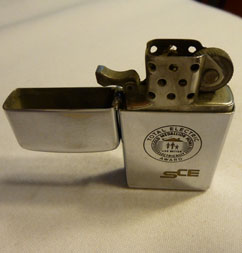 |
| Medallion Home Lighter | Medallion Home Lighter | Medallion Home Lighter |
 |
 |
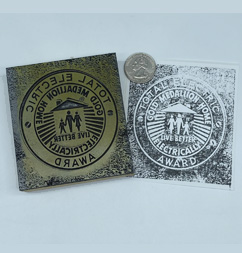 |
| Medallion Home Lighter | Medallion Home Lighter w/ Ready Electric | Medallion Home Rubber Stamp |
 |
 |
 |
| Medallion Home Tape Measure | Medallion Home Tape Measure | Medallion Home Ruler |
 |
 |
 |
| Medallion Home Ruler | Medallion Home Ruler | Medallion Home Stappler |
 |
 |
 |
| Medallion Home Lapel Pin | Medallion Home Cuff Links | Medallion Home Tie Bar |
 |
 |
 |
| Medallion Home Jacket Pocket Crest | Medallion Home Lugage Tag | Medallion Home Document Holder |
 |
 |
 |
| Medallion Home Plug-In Nightlite | Medallion Home Childrens Game | Medallion Home Cards |
For More Information:
- "Puget Power to Sponsor Electrical Home Program" - Seattle Times: July 6, 1958
- "All-Electrical Newport Hills Home" - Seattle Times: July 17, 1960
- "Medallion March" - Seattle Times: October 9, 1960
- "Light for Living - Mercer Island Home" - Seattle Times: October 23, 1960
- "It's Here: Sommerset" - Seattle Times: August 27, 1961
- "Somerset Tourist Look World's Fair in "Eye" 150 Feet Above Needle" - Seattle Times: February 18, 1962
- "Gold Medallion Gives Home Buyer Electric Excellence" - The Morning Record: February 12, 1964
- "The Electric Age: Gold Medallion Homes" - Seattle Times: September 10, 1967
- House of Light: A Glowing Promise fades to Dying Ember - website
- Live Better Electrically Medallion Home - website
- "Live Better Electrically" commercial - GE Theater, 1957
- Live Better Electrically Jingle 1957
- It's Fun to Live Electrically - 1940
- Westinghouse Total Electric Home TV Advertisment - c.1959
- "Live Better Electrically - The Medallion Home Program of the 1950s, 60s & 70s" - PowerPoint Program